
iLawBot is the AI legal workspace that never fabricates a citation.
iLawBot handles the research, drafting, and groundwork so you stay focused on the work that matters. Citation-backed answers grounded over your own documents and Indian law — built for advocates, firms, and students.
- Free Explore plan
- No card to start
- Human-review gate
- Audit-logged
DPDP-aligned
Data-protection by design
BCI-conscious
No prohibited AI uses
In-India inference
Privileged work stays in-region
Verifiable citations
Every claim is openable
One connected workspace
Everything legal work needs, in one place
From research and drafting to OCR and case management — iLawBot brings your documents, the law, and your reasoning into a single, verifiable system.
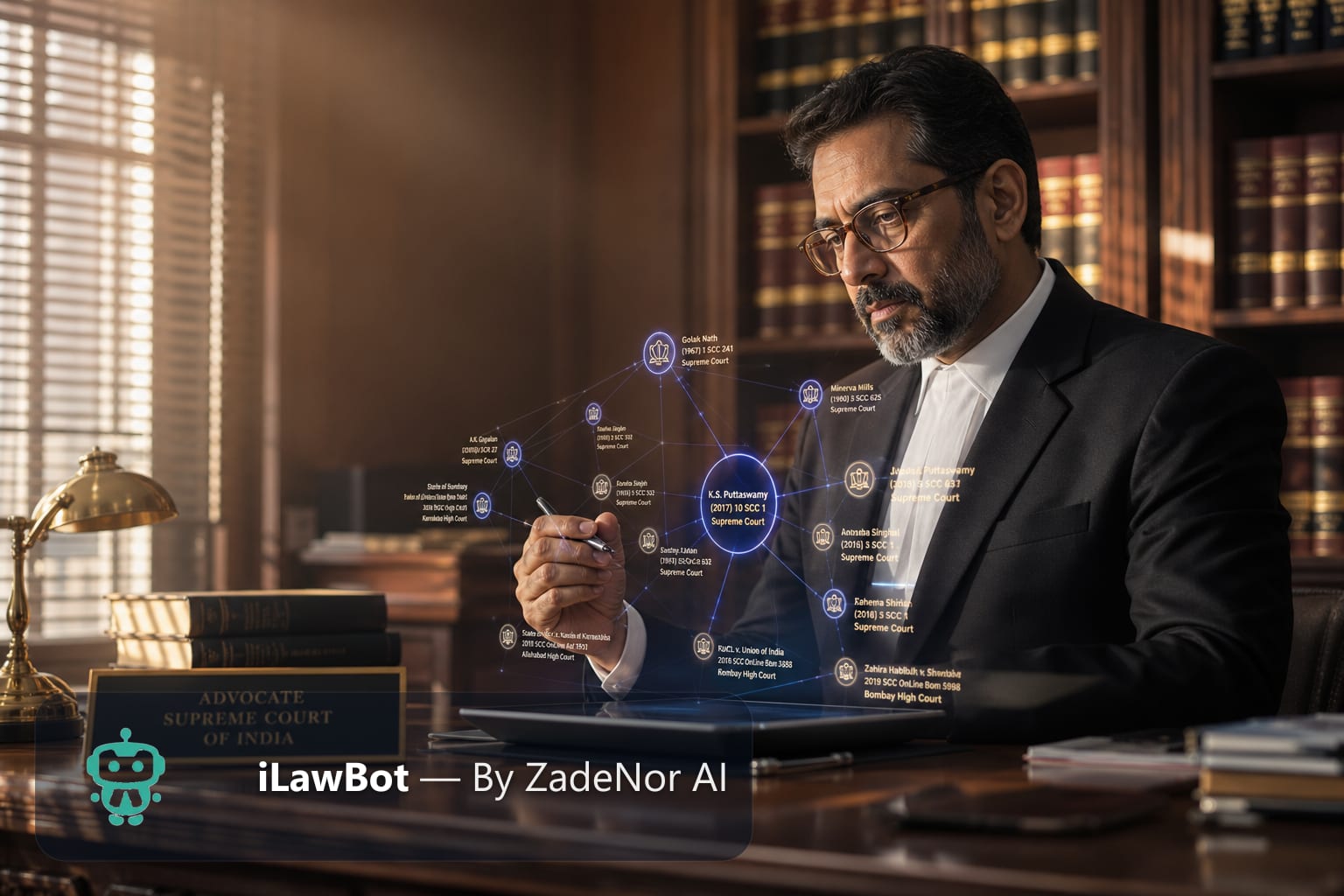
See how authorities cite one another
Traverse a 3D citation graph built over Indian case law and your own library. Treatment signals — followed, distinguished, overruled — are clearly labelled as AI-suggested and as-of a date, never asserted as settled good law.
- Interactive 2D/3D graph of cases & statutes
- Treatment labels with confidence + date
- Jump from any node to the grounded source

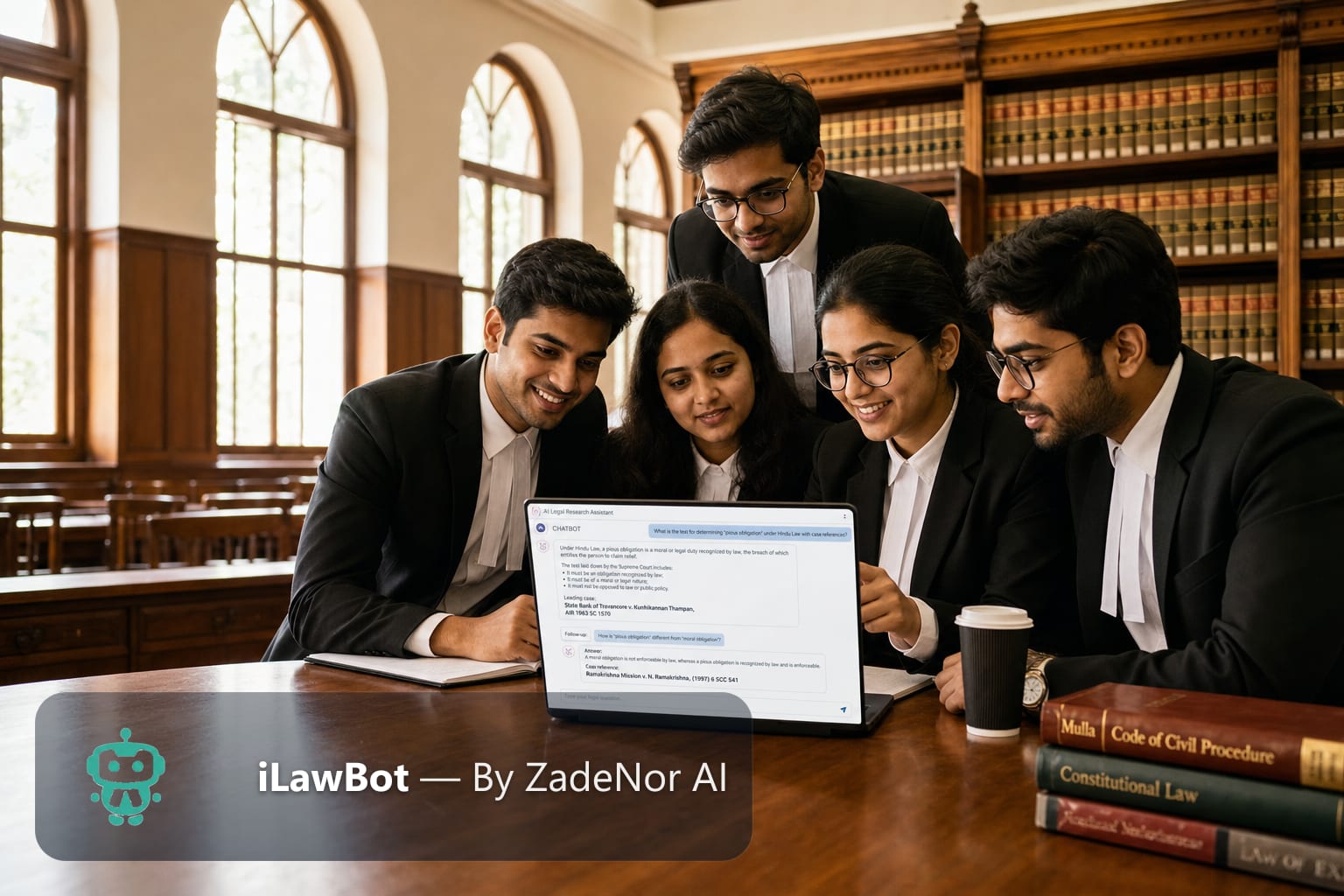
Ask in plain language, get grounded answers
A conversational research assistant answers over your documents and Indian law. Every claim carries an [id] marker you can open and verify, with an optional web-search tool that is clearly flagged as unverified.
- Multi-turn chat with citations you can open
- Optional web grounding (flagged unverified)
- Pick your model per conversation
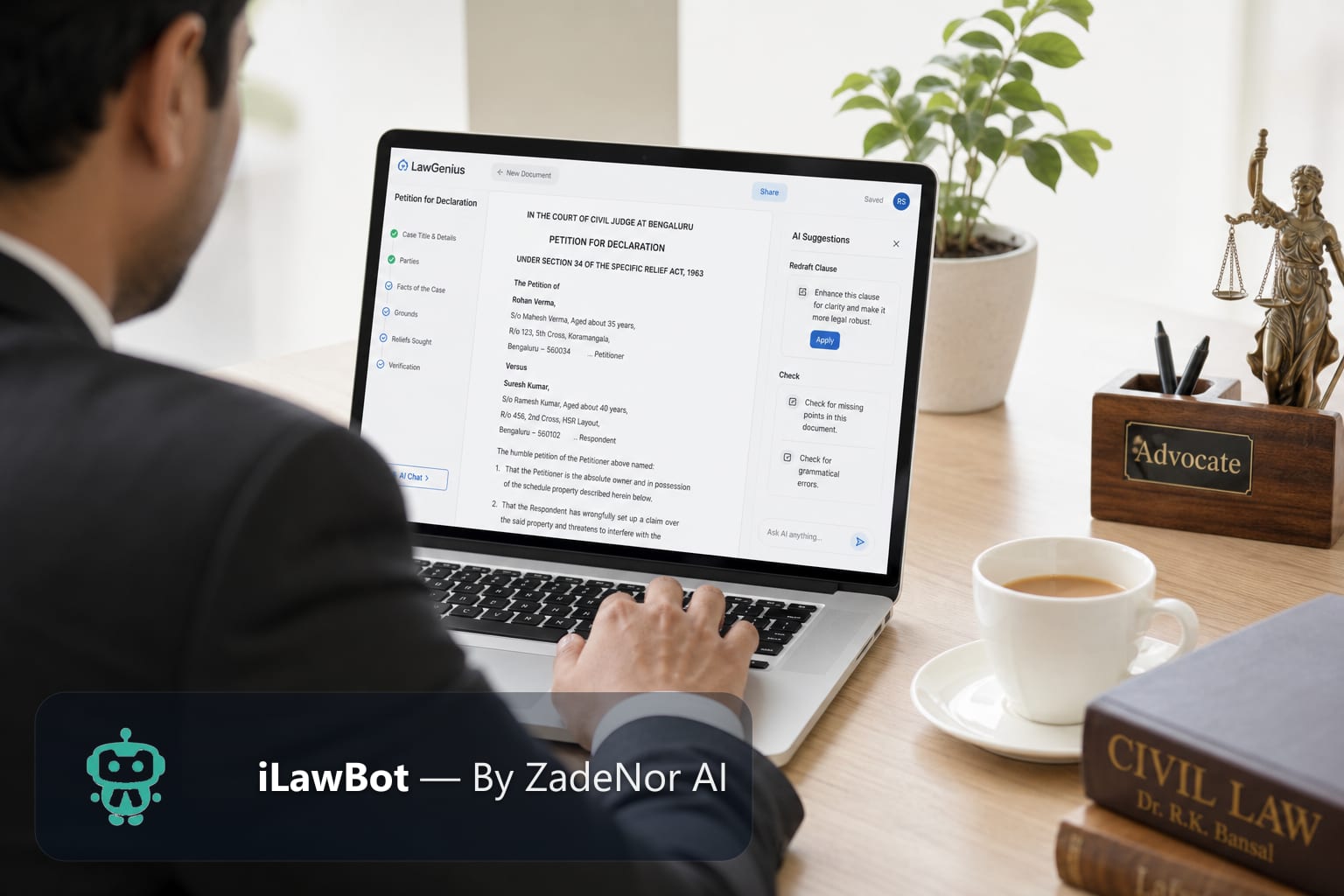
Turn hours of drafting into minutes
Generate structured petitions, agreements, notices, and briefs — or refine existing drafts. Output is always advisory and reviewable, with the law reasoned as-of the relevant date (BNS/BNSS/BSA from 1 Jul 2024).
- Petitions, agreements, notices, briefs
- Temporal-aware legal reasoning
- Always advisory — nothing files itself
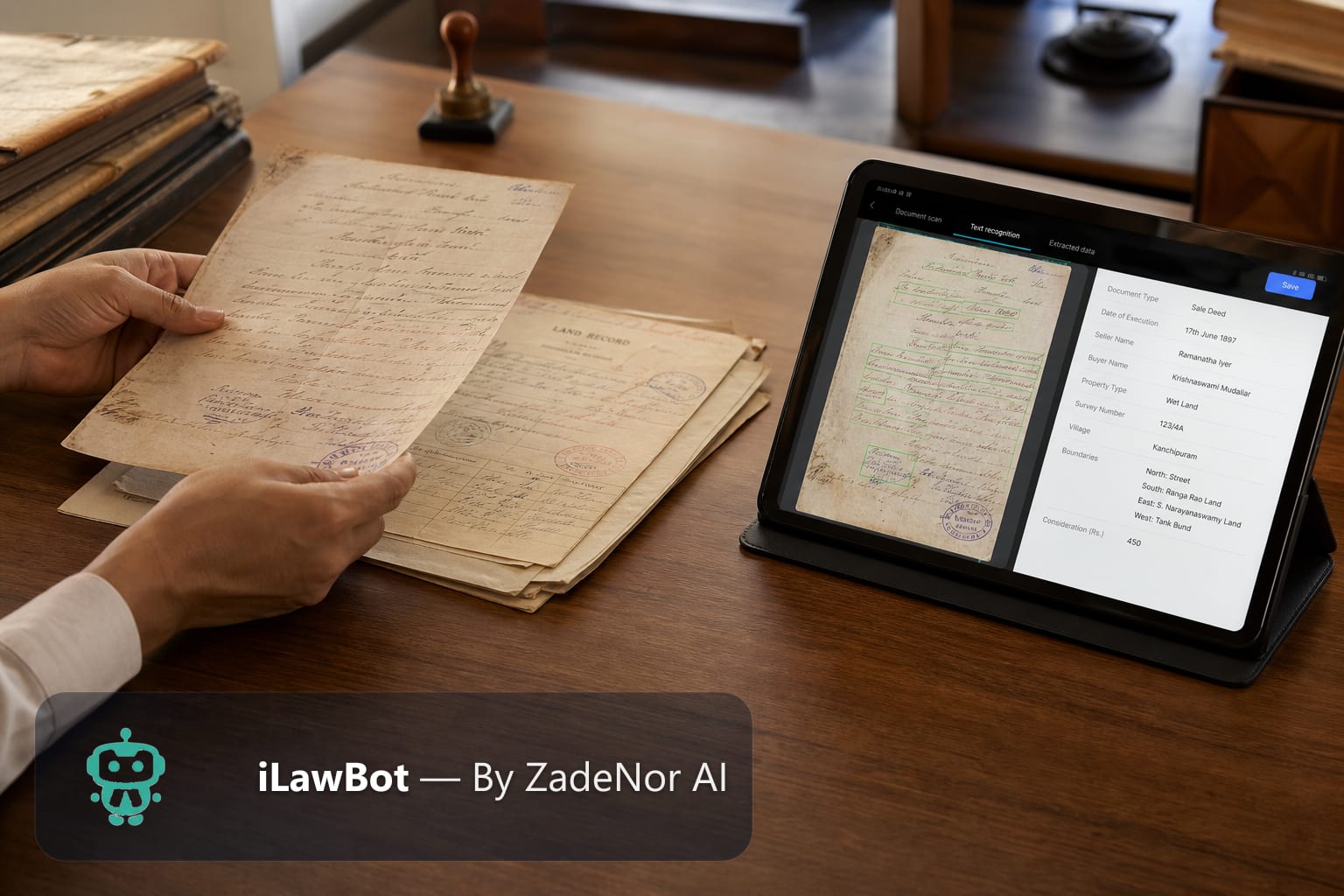
Digitize handwritten records & land documents
Upload pleadings, contracts, judgments, and handwritten land records. Each file is OCR'd, chunked, embedded, and indexed — with low-confidence regions routed to a human-verify queue and originals always retained.
- Handwritten & printed OCR/HTR
- Human-verify queue for low-confidence text
- Tenant-scoped, searchable, originals retained
Never miss a hearing or a limitation date
Keep clients, matters, and their relationships in one deterministic workspace, with a hearing calendar and cause-list view plus limitation-deadline awareness so critical dates surface before they bite.
- Clients, matters & relationships in one place
- Hearing calendar & cause-list view
- Limitation-deadline awareness
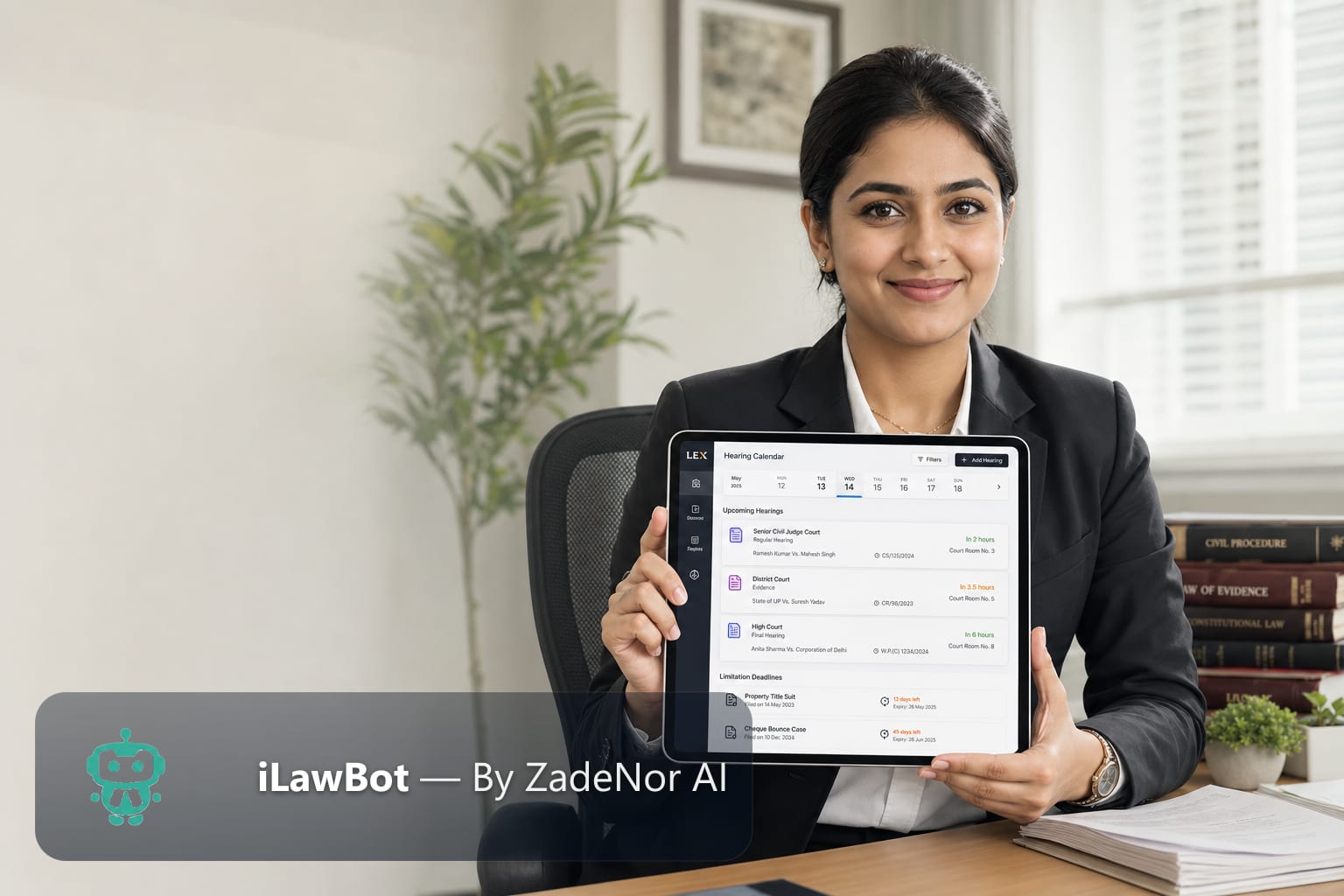
Built for Indian practice
From the chamber to the courtroom

Litigation teams
Coordinate matters, evidence, and authorities across the bench.
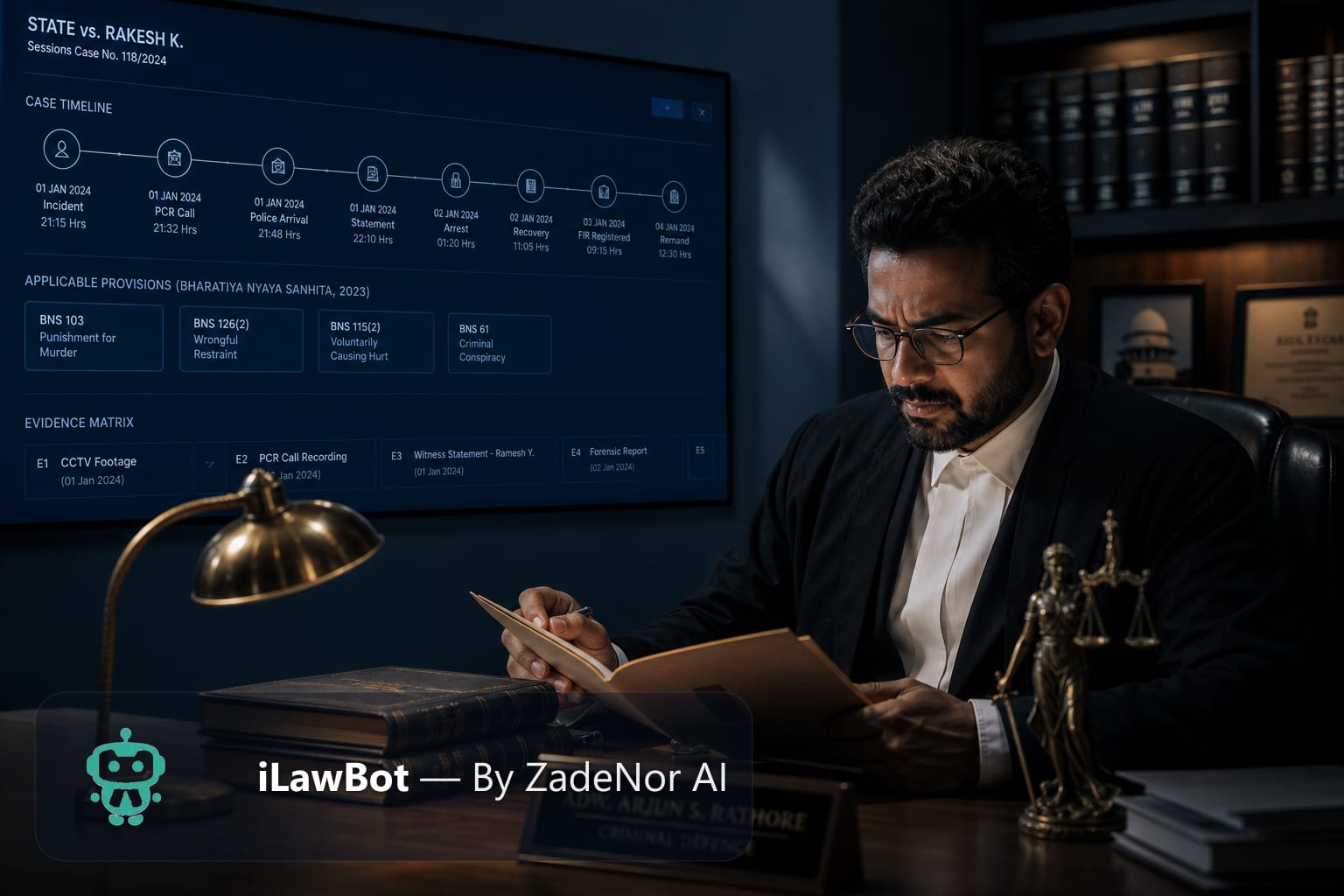
Criminal defense
Build evidence timelines with BNS-2023-aware reasoning.
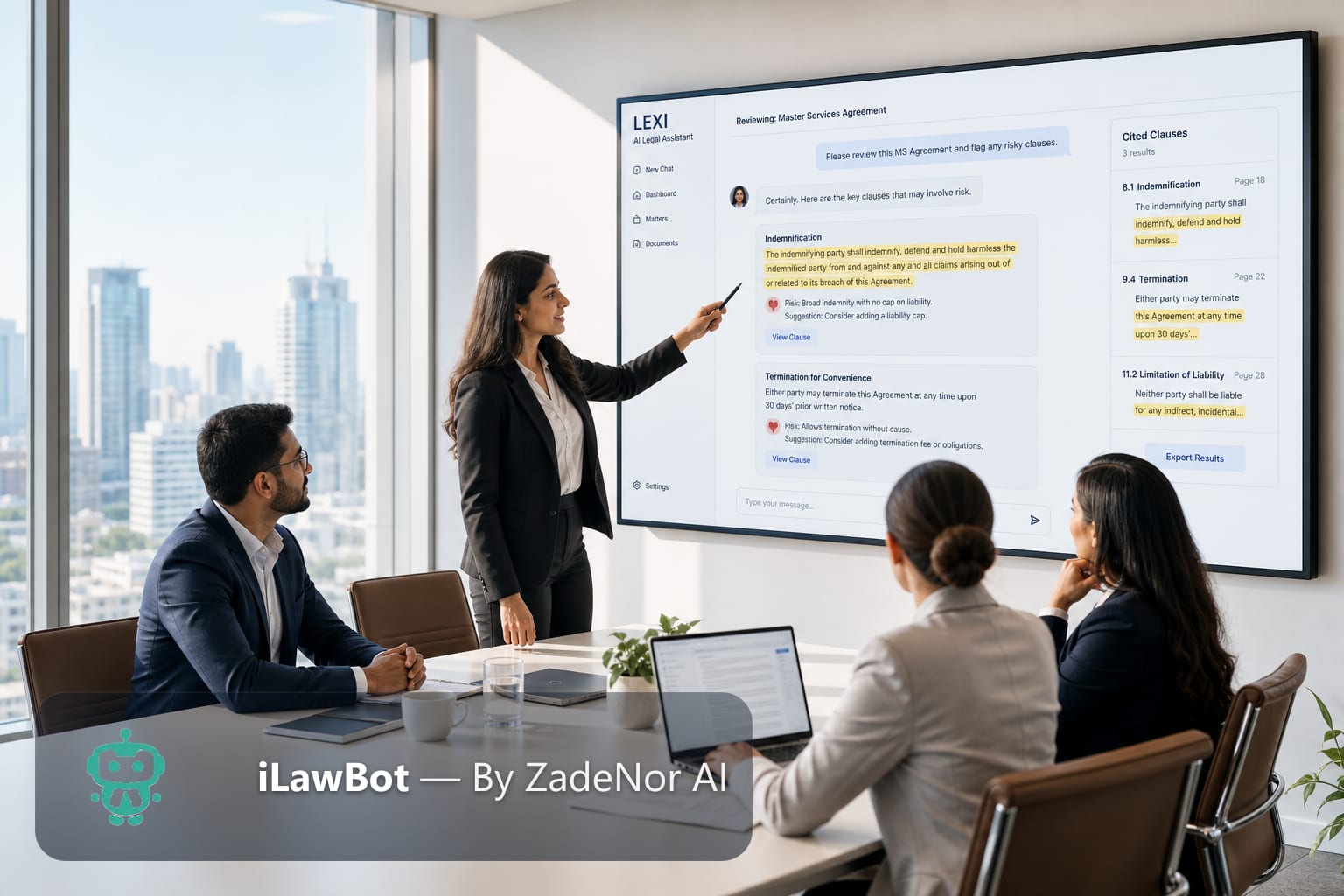
Corporate & contract review
Review contracts and surface risk with an AI assistant.
Solo advocates & chambers
Research, draft, and manage cases from a single workspace.
How it works
From documents to defensible output
Bring your documents
Upload pleadings, contracts, and judgments — even handwritten records. Each file is OCR'd, chunked, embedded, and indexed, securely and tenant-scoped.
Ask, draft, explore
Research over your library and Indian law, draft documents, and traverse the citation graph — all in one connected workspace.
Verify, then act
Open every citation, check the grounding report, and apply human review. AI output is advisory — nothing files itself.
Guardrails that are non-negotiable
Trust isn't a feature you bolt on. These constraints are load-bearing — enforced in the product and asserted by our tests.
No fabricated citations
Answers cite only retrieved, verifiable spans. Good-law signals are labelled AI-suggested and unverified unless from a licensed citator.
Mandatory human review
Every AI output is advisory. Low-confidence OCR/HTR regions route to a human-verify queue; originals are always retained.
Attorney–client privilege
A privilege classifier runs first. Privileged content is pinned to the in-region path and never egresses to external providers.
Append-only audit log
Claims, citations, scores, and human actions are recorded immutably — a complete, tamper-evident trail of every decision.
Temporal validity of law
We reason about which law applied as of the offence/transaction date (BNS/BNSS/BSA from 1 Jul 2024) — not a naive 1:1 map.
No prohibited AI uses
No adjudication, sentencing, bail/recidivism scoring, judge analytics, or outcome prediction. Ever.
Simplify your legal chaos.
Start free and upgrade when you're ready. Pick a plan, sign up, and you're in — no gaps, no surprises.
Frequently asked questions
Is iLawBot built for Indian legal practice?+
Yes. It is India-native: BNS/BNSS/BSA-aware temporal reasoning, Indian states and languages, and a workspace designed around how advocates and firms actually work.
Can I verify research outputs?+
Always. Every answer cites retrieved spans by [id]. Open the source, read the surrounding context, and review the grounding report before relying on anything.
How is my privileged content protected?+
A privilege classifier runs before any model call. Privileged content is pinned to the in-region processing path and is never sent to external providers; the egress fallback is disabled on that branch.
Do I need a credit card to start?+
No. The Explore plan is free. Paid plans add capacity and team features; you can start free and upgrade any time.